
Dirty solar panels can lose access to useful sunlight. Dust and bird droppings can build up over time. Leaves can also cover parts of the panel surface. This is why a solar panel cleaning guide can help homeowners plan safe care. The right method depends on dirt type and panel access.
Cleaning is not just about washing the glass. Weather and panel heat also matter. So do the tools and water used for cleaning. Roof access can also create safety risks. Now let’s see why proper care matters before energy output starts to change.
Why Clean Solar Panels Before Energy Output Drops
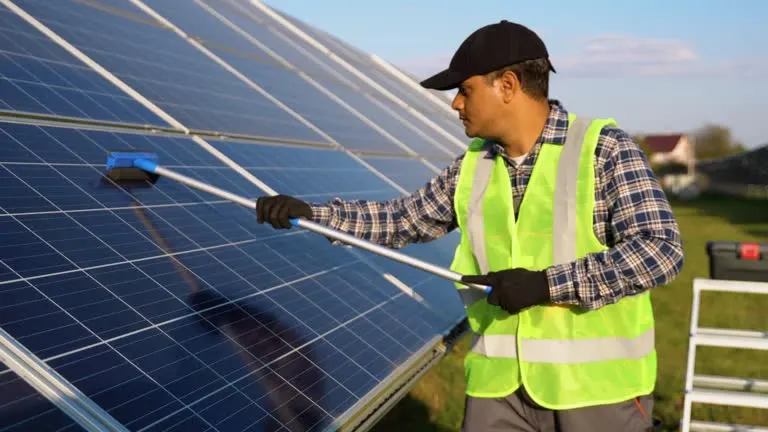
Solar panels need clear access to sunlight each day. Dust can settle across the glass surface. Pollen can also create a thin layer. Bird droppings may block parts of a panel. Leaves can cover larger areas and reduce light exposure.
A solar panel maintenance guide can help you spot these issues early. Clean panels may support better energy production. The actual effect depends on the dirt and local conditions. It can also depend on the panel design and weather.
Not every dirty panel needs immediate washing. Light dust may have little effect in some areas. Heavy buildup can create a larger concern. Checking system output can help you decide when cleaning makes sense.
How Dirt and Debris Affect Solar Panel Performance
Solar panels face many types of outdoor buildup. Dust is common in dry areas. Pollen can settle during certain seasons. Bird droppings can create thick spots on the glass. Leaves can also block sections of the panel. Some dirt is easy to remove with water. Other buildup can stick to the glass. Mineral deposits may remain after water dries. Pollution can also leave a thin film. Each type of dirt may need a different cleaning method.
Dirty solar panels can show changes in energy output. A monitoring app may show lower production. An inverter display may also show daily changes. These changes do not always mean the panels are dirty. Weather and system faults can also affect production. Partial coverage needs extra attention. A large leaf may cover part of one panel. Bird droppings can also create small blocked areas. The effect depends on the panel system and its design. This is why regular checks can be useful.
Signs Your Solar Panels Need More Than Rainwater
Rain can wash away loose dust from panel glass. It may not remove every type of buildup. Some dirt can remain after several rain events. Look for these signs before deciding to clean. When needed, clean solar panels can help maintain clear sunlight access, although the actual performance benefit depends on the amount and type of buildup.
- Thick dust remains across the panel surface.
- Bird droppings remain after rainfall.
- Leaves stay on the panels.
- Sticky tree residue covers parts of the glass.
- White mineral spots remain after rain.
- Energy output drops without another clear reason.
- Dirt appears in areas that rain does not reach well.
Signs your solar panels are dirty can be easy to miss. A clean-looking surface may still have a thin film. Monitoring data can give you another useful clue. Compare output with normal weather conditions before taking action.
Choosing the Right Weather and Time to Start Cleaning
Panel temperature matters when you begin cleaning. Hot glass can make water dry very fast. This can leave marks and mineral spots behind. Early morning can provide cooler conditions for cleaning. A suitable overcast period may also work well.
The best weather for cleaning is calm and mild. Strong winds can make roof work less safe. Storms can create serious electrical and access risks. Heavy rain can also make surfaces slippery. Wait for safer conditions before starting the job.
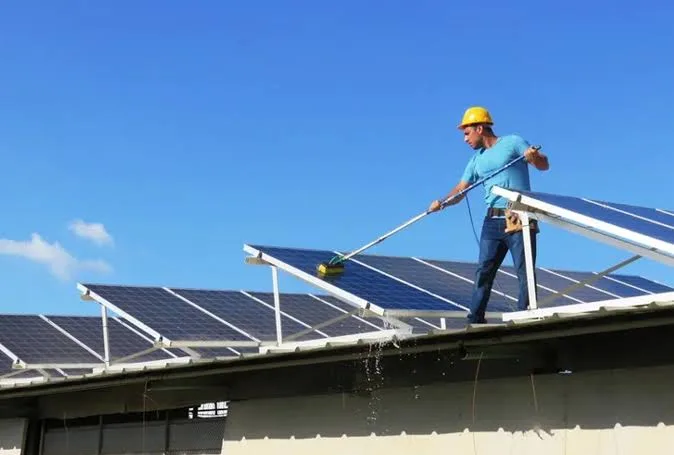
Cleaning rooftop solar panels during strong sunlight can create more work. Water may dry before you can rinse it away. This can leave marks on the glass. Choose a time when the panels are cooler. Always consider roof safety before choosing the cleaning window.
Solar Panel Cleaning Methods for Different Dirt Types
Different dirt needs different cleaning methods. Loose dust may need only a gentle water rinse. Stubborn buildup may need careful solar panel cleaning with soft tools. Choosing the right method helps reduce the risk of scratching the glass or leaving residue behind.
Rinsing Loose Dust With Clean Low-Pressure Water
Loose dust can often be removed with clean water. Use a gentle flow instead of strong pressure. High pressure can damage seals or other parts. It can also force water into areas where it does not belong.
A controlled rinse can remove surface dust before deeper cleaning. This also reduces the need for scrubbing. A simple rinse may be enough when buildup is light. Check the surface after rinsing before using another method.
Using a Soft Brush for Stubborn Surface Dirt
A soft brush can help loosen stuck surface dirt. Choose bristles made for gentle glass cleaning. Avoid hard brushes that can scratch the surface. Do not press hard while working across the panel.
The solar panel cleaning process should stay gentle. First loosen the dirt with water. Then use the soft brush with light movement. Rinse the surface after brushing. This can reduce the chance of dragging dry grit across the glass.
Working With a Microfiber Cloth on Accessible Panels
Microfiber cloths can help with small dirty areas. They work well on panels that are easy to reach. Wet the surface before wiping. This helps reduce friction during cleaning.
Avoid wiping dry grit across the glass. Rinse away loose dirt first. Use light pressure when working with the cloth. Replace the cloth if it collects too much grit. This keeps the cleaning process more controlled.
Treating Stuck-On Bird Droppings With Gentle Soaking
Bird droppings can become hard after drying. Trying to scrape them off can damage the glass. Gentle soaking can soften the buildup first. This makes removal easier without strong force. Apply clean water and let it sit briefly. Do not use a hard scraper. A soft cloth can then remove the softened residue. Repeat the process if needed. This approach is safer than aggressive rubbing.
Using Mild Cleaning Solutions When Water Falls Short
Some buildup may not come off with water alone. A mild cleaning solution can help in these cases. Use only products that are suitable for solar panels. Avoid harsh chemicals that may leave residue.
The solution should not create a thick film. Residue can affect the panel surface after drying. Follow the panel maker’s cleaning guidance when available. Rinse the surface well after cleaning. This helps remove any remaining product.
Removing Mineral Spots Without Aggressive Scrubbing
Hard water can leave white spots on panel glass. These marks may become harder to remove over time. Aggressive scrubbing can scratch the surface. Start with gentle soaking and careful wiping instead.
Water quality can affect the cleaning result. Some areas have more minerals in their water supply. A suitable rinse method may help reduce spotting. Persistent mineral buildup may need special care. Professional help can be safer for difficult deposits.
Knowing When Specialized Cleaning Is More Appropriate
Some panels have heavy or unusual contamination. Difficult roof access can also change the safest method. Large systems may require more time and equipment. These situations can make professional cleaning a better choice.
A professional crew can use tools made for the job. They can also assess difficult access before cleaning. This can reduce the need for unsafe roof movement. Specialized cleaning may also help with stubborn buildup.
Essential Tools That Make Solar Panel Cleaning Safer
The right tools can make cleaning easier and safer. You do not need a large set of special equipment. Choose tools based on reach and surface safety.
Soft Bristle Brushes for Gentle Surface Cleaning
Soft bristles can loosen dirt without harsh rubbing. Avoid hard brushes and rough cleaning pads. These can scratch the glass surface. A brush should also be clean before use.
Telescopic Poles for safer ground-level reach
An extendable pole can help reach panels from the ground. This can reduce unnecessary movement on a roof. It can also help with low-roof systems. Choose a pole that stays stable during use.
Garden Hoses With Controlled Water Flow
A garden hose can help rinse loose dirt. Use a gentle flow rather than strong pressure. Pressure washers are not suitable for this task. Controlled water can clean without placing extra force on the panels.
Microfiber Cloths for Delicate Spot Cleaning
Microfiber cloths can help with small dirty areas. They are useful when panels are easy to reach. Keep the cloth clean during the process. Dirt trapped in the cloth can scratch the glass.
Squeegees for Reducing Water Spots and Residue
A soft squeegee can remove extra water after cleaning. Use light pressure across the glass. Do not press hard against the surface. This can help reduce water marks in areas with hard water.
Buckets and Mild Cleaning Solutions for Tough Areas
A clean bucket can hold water for spot cleaning. Use a mild solution only when needed. Avoid strong chemicals and products that leave residue. Keep the cleaning setup simple and easy to control.
Safety Gear for Panels That Require Roof Access
Roof work can create serious fall risks. Wear stable footwear with good grip. Use suitable access equipment when needed. Never walk or stand on solar panels. Safe solar panel cleaning starts with safe access. If the roof feels unsafe, then stop the work. A professional service may be the better choice. Personal safety should always come before cleaning.
Seven Steps for a Safe and Effective Panel Cleaning
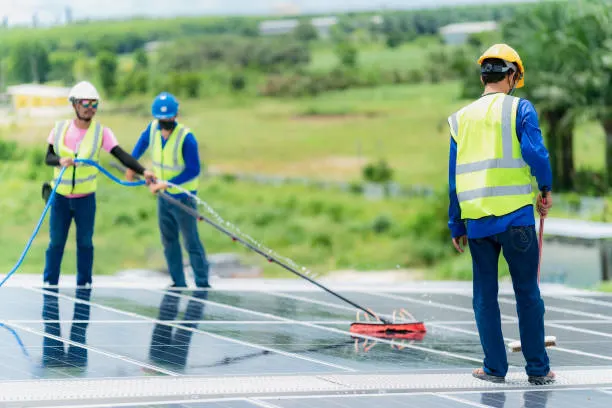
A clear process can make solar panel cleaning easier. Each step helps reduce damage and safety risks. Follow the panel maker’s guidance whenever it is available.
Step One: Check the Panels and Cleaning Conditions
Inspect the panels before starting any work. Look for cracks or damaged areas. Check for heavy buildup and loose parts. Also check the weather and roof conditions. This first check can prevent unsafe cleaning. It can also show when professional help is needed. Never begin work on damaged panels without proper guidance. A safe start can prevent bigger problems later.
Step Two: Shut Down the Solar System Properly
Follow the system maker’s shutdown steps before cleaning. This can reduce electrical risks during the work. Solar equipment can still produce power in daylight. Do not guess which switches or parts to use. If you are unsure about shutdown steps, then stop. Check the system guide or contact a trained expert. Electrical safety matters more than a quick cleaning job.
Step Three: Remove Loose Dirt Before Scrubbing
Start with a gentle water rinse. This can remove loose dust and grit. It also reduces the need for hard rubbing. Dry dirt should not be dragged across the glass. Removing loose dirt first can protect the panel surface. It also makes the next cleaning step easier. Use clean water and controlled flow. Check the surface before moving to deeper cleaning.
Step Four: Gently Wash the Panel Surface
Use a soft brush or microfiber cloth when needed. Work with light pressure across the surface. Keep the panel wet during cleaning. This can reduce friction and help loosen dirt. Do not use hard tools or rough pads. Avoid pressure washing the panels. Never stand on the glass. Gentle cleaning can protect the surface and system parts.
Step Five: Rinse Away Soap and Remaining Residue
Rinse the panels with clean water after washing. Remove all visible cleaning products from the glass. Leftover residue can create marks when it dries. A clean final rinse helps prevent this problem. Check the panel from different angles. Look for streaks or remaining dirt. Repeat the rinse when needed. Do not leave cleaning solution on the surface.
Step Six: Remove Excess Water When Appropriate
A soft squeegee can remove extra water. This may help reduce mineral spots. Use light pressure and clean equipment. Do not drag grit across the glass. Water quality matters in some areas. Hard water can leave visible spots after drying. A careful final rinse may reduce this issue. Professional cleaning may help when mineral deposits are severe.
Step Seven: Inspect the Clean Panels and Restore Operation
Look across the clean surface after washing. Check for remaining dirt and water marks. Look for cracks or loose parts. Also check nearby system components when safely possible. Follow the system maker’s steps before restoring operation. Monitor energy output after the cleaning. A change in output may take time to become clear. Continued low output may point to another system issue.
Common Cleaning Mistakes That Can Damage Solar Panels
Small solar panel cleaning mistakes can cause damage or create safety risks. Using the wrong tools may scratch the glass. Unsafe roof work can also cause serious problems. Now let’s look at the common mistakes homeowners should avoid.
- Using a pressure washer on the panels
- Scrubbing with hard or rough brushes
- Using harsh cleaning chemicals
- Cleaning panels while they are very hot
- Walking or standing on the panels
- Scraping dried bird droppings with hard tools
- Rubbing dry dirt across the glass
- Ignoring roof access risks
- Cleaning without checking system guidance
- Using dirty tools that hold grit
- Leaving soap or cleaner on the surface
- Cleaning during strong winds or storms
How Rain Seasons and Location Change Cleaning Needs
There is no single cleaning schedule for every home. Local weather can change how quickly panels collect dirt. Dry areas may collect more dust, while homes near trees may collect more leaves and pollen. Keeping nearby gutter cleaning on a regular maintenance schedule can also help reduce leaves and debris accumulating around the property.
Bird activity can also change cleaning needs. Construction near the home may create extra dust. Coastal areas can have different surface deposits. Rain can help rinse loose dirt from panels. It does not always remove stuck residue.
Cleaning frequency should match actual conditions. Check the panels from time to time. Monitor energy output for unusual changes. This condition-based approach can prevent unnecessary cleaning.
DIY Cleaning or Professional Help: Which Makes Sense?
DIY Solar Panel Cleaning may suit some easy-to-reach systems. Professional help may suit difficult roofs or heavy buildup. Safety and access should guide the decision. Cost is only one part of the choice.
| Factor | DIY Cleaning | Professional Cleaning |
| Cost | Lower direct cost | A service fee applies |
| Safety | More personal risk | Trained crew can reduce risk |
| Equipment | Basic tools may work | Special tools may be available |
| Roof Access | Best for easy access | Better for difficult access |
| Cleaning Depth | Good for light buildup | Better for heavy buildup |
| Damage Inspection | Basic visual check | Broader inspection may be possible |
| Best For | Easy ground-level systems | Hard-to-reach or complex systems |
Residential solar panel cleaning can be suitable for simple systems. A ground-level setup may be easier to reach. Steep roofs need more care. Damaged panels also need professional attention. A professional can handle access and heavy buildup. They may also spot visible system concerns. This does not mean every home needs professional cleaning. Choose the option that fits your system and safety limits.
Solar Panel Maintenance Habits That Protect Performance
Cleaning is only one part of good panel care. Regular checks can help spot problems before they grow. A simple routine can also make future cleaning easier. Following a consistent solar system care routine can help homeowners monitor the condition of their panels and surrounding equipment.
Schedule Visual Checks Between Deep Cleaning Sessions
Look at the panels between full cleaning jobs. Check for leaves and heavy dust. Look for new bird droppings. Also check for obvious surface damage. These quick checks can show when cleaning may be needed. They can also reveal problems that need expert attention. Do not touch damaged parts during a visual check.
Monitor Energy Production for Unexpected Changes
Check your system monitoring from time to time. Look for changes that do not match weather conditions. A sudden drop may have several causes. Dirt is only one possible reason. Solar panel performance can change due to system faults. Shading can also affect production. Compare current data with normal patterns. Contact a trained expert if unusual changes continue.
Check for Leaves, Nests, and Persistent Debris
Trees can create recurring debris around solar panels. Birds can also build nests near the system. Leaves may remain on the glass after light rain. Regular checks can help catch these issues early. Remove loose debris only when it is safe. Do not climb onto an unsafe roof. If access is difficult, use professional help. Safety remains more important than a quick cleanup.
Watch for cracks, discoloration, or surface damage
Inspect the glass for visible cracks. Look for unusual marks or color changes. Damaged areas should not be scrubbed. Cleaning may make an existing problem worse. Stop DIY work if damage appears. Contact a trained solar professional for advice. Cleaning cannot fix broken panels or system parts. Early attention can help prevent further issues.
Keep Surrounding Vegetation From Creating New Buildup
Trees can drop leaves and pollen onto panels. Branches can also create shade. Nearby growth may increase bird activity around the system. Keep vegetation managed around the solar area. Do not trim branches from an unsafe roof. Use suitable ground-based methods when possible. Professional help may be needed for difficult areas. Good property care can reduce future buildup.
Review Manufacturer and Warranty Maintenance Guidance
Solar systems can have different care needs. Check the maker’s cleaning instructions before using products. Some warranties may also include maintenance rules. Following these instructions can help protect your system. Avoid guessing about cleaning products. Ask the installer when guidance is unclear. This is especially important for newer systems. The right care can reduce avoidable damage.
Plan Periodic Professional System Inspections
Cleaning does not replace a full system check. Wiring and inverters can have issues that dirt cannot cause. Mounting parts may also need inspection. A trained professional can check areas homeowners cannot safely reach. Professional inspections can be useful when output changes continue. They may also help with older systems. Regular checks can support long-term system care. Follow the maker’s service advice when available.
How to Check Panels After Cleaning for Hidden Problems
Look over the panels after the cleaning is done. Check for streaks and remaining mineral spots. Look for cracks or visible surface damage. Also check nearby areas that may collect dust or debris. For broader exterior property maintenance, window washing services can complement solar panel care by keeping other glass surfaces around the home clean and well maintained.
Post-cleaning maintenance should include energy monitoring. Compare output with normal results over the next few days. Weather can change daily production. Do not assume every output change comes from cleaning.
Recurring debris may point to a nearby tree or bird issue. Persistent low output may point to another system concern. If problems remain, then contact a trained solar expert. Cleaning alone cannot fix technical faults.
When Professional Solar Cleaning Is the Safer Choice
Some solar systems are not safe for DIY cleaning. Steep roofs can create a serious fall risk. Difficult access can also make the work harder. Heavy buildup may require extra tools and time.
Damaged panels need special care. Electrical concerns should also be left to trained professionals. Do not clean equipment when you are unsure about its condition. A professional can assess the work before starting.
A solar panel cleaning service guide should include safety. Professional service is not only about convenience. It can also reduce risks linked to roof work. Choose professional help when the setup is beyond your safe reach.
How Cleaning Costs Can Fit Into Your Maintenance Plan
Professional cleaning costs can vary by system. The number of panels can affect the work time. Roof access can also change the service needs. Steep roofs may require more safety measures.
Buildup level can also affect the cleaning process. Heavy dirt may take more time to remove. Local service rates can vary as well. Some providers may offer different service levels.
Residential solar panel cleaning should be viewed as part of system care. Compare the service cost with the time and risk involved. Very low prices may not always mean good value. Ask what the service includes before booking.
Smart Monitoring and New Ways to Reduce Cleaning Needs
System monitoring can help reduce unnecessary cleaning visits. Homeowners can check output before deciding to wash panels. This can help separate dirt concerns from normal weather changes. Monitoring should support cleaning decisions rather than replace inspections.
Some larger systems use automated cleaning tools. Low-water methods may also be used in some settings. New surface designs may aim to reduce dirt buildup. These options can vary by system size and location.
Solar panel care tips still need to focus on the basics. Technology does not remove the need for visual checks. It also cannot fix damaged parts. Use new tools only when they suit the system.
Final Thoughts for a More Reliable Solar Panel Routine
A good solar panel cleaning guide starts with safe planning. Check the panels before cleaning them. Choose cool and calm weather. Use gentle tools and controlled water flow. Avoid harsh chemicals and hard scrubbing. Superior Solar Cleaners can also be considered when professional cleaning is needed for difficult-to-reach panels or heavy buildup.
Regular care can help you notice dirt and damage early. Monitoring can also show changes in energy output. Difficult roof access should not be treated as a simple DIY task. Safety must always come before a cleaner panel surface.
If your panels need deep cleaning or difficult access work, consider professional help. A trusted service can handle the cleaning with suitable tools. It can also help you spot issues that need more attention.
FAQs About Cleaning and Maintaining Solar Panels
These questions cover common panel cleaning concerns. They can help with safety and tool choices. They also cover cleaning frequency and professional service.
Use clean water with a soft brush or microfiber cloth. Avoid pressure washers and harsh chemicals. Never walk on panels during cleaning.
Soft brushes and microfiber cloths work well for gentle cleaning. A hose with controlled water flow can remove loose dirt without harming panels.
Cleaning needs depend on local weather and buildup. Check panels often and clean them when dirt remains or energy output changes unexpectedly.
Rain can remove loose dust but may leave bird droppings and mineral spots. Check panels after rainfall to decide if further cleaning is needed.
Choose professional cleaning for steep roofs, difficult access, heavy buildup, damaged panels, or unsafe conditions that make home cleaning risky.